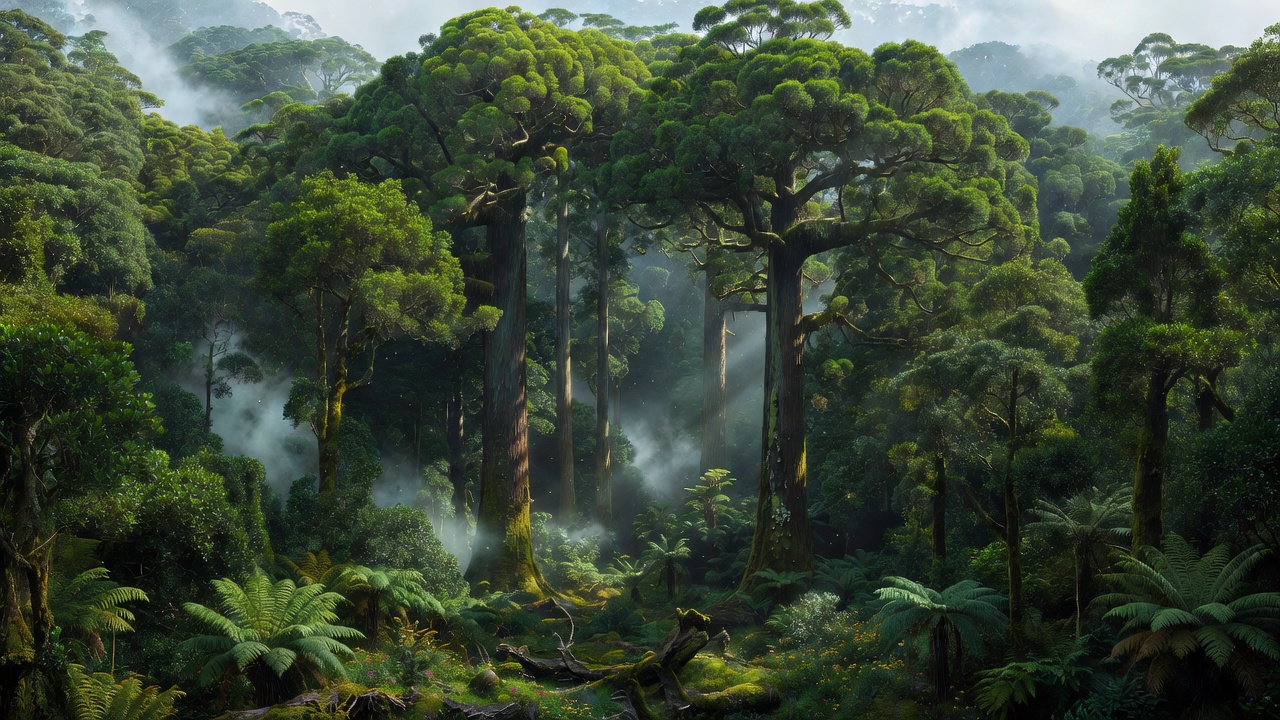
The Dramatic Transition from Ocean to Jungle
Few driving corridors on earth produce as rapid a transition of ecological biomes as the B100 through Victoria's Otway Ranges. Within 15 minutes of leaving the coastal harbor of Apollo Bay, you ascend from sea level to over 400 metres into an ancient wet temperate rainforest dating back to the prehistoric Gondwanan supercontinent.
Annual precipitation here frequently exceeds 2,000 millimeters, nourishing towering Mountain Ash (Eucalyptus regnans)—the tallest flowering plant on planet Earth, which can reach heights over 90 metres—and thick understories of ancient soft tree ferns (Dicksonia antarctica).
Top Expedition Waypoints in The Otways
1. Maits Rest Rainforest Walk
Located directly off the Great Ocean Road 15 minutes west of Apollo Bay, Maits Rest provides a world-class 800-metre elevated wooden boardwalk loop. The walk meanders past 300-year-old Myrtle Beech trees, luminous moss carpets, and trickling creek gullies. It requires zero off-road vehicle equipment and takes approximately 30 minutes to complete.
2. Cape Otway Lightstation & Koala Country
At the crest of the Otway ridge, turn south onto Lighthouse Road for a 12-kilometre scenic detour down the Cape Otway peninsula. The road passes through towering manna gum forests that host one of Victoria's most dense concentrations of wild koalas. Drive with heightened vigilance as koalas frequently cross the bitumen to transition between feeding trees.
At the peninsula tip stands the Cape Otway Lightstation, perched 90 metres above the bass strait. Operating since 1848, it is the oldest surviving lighthouse on the Australian mainland and guarded the treacherous 'Eye of the Needle' entry into Bass Strait for thousands of immigrant ships.
3. Erskine & Triplet Falls
For waterfall hunters, the Otways are packed with dramatic plunges:
- Erskine Falls: Located near Lorne, tumbling 30 metres into a lush fern gulley down a series of 240 stone steps.
- Triplet Falls: Deep in the Beech Forest interior, featuring three distinct cascading streams framed by historical timber harvesting relics.
- Beauchamp Falls: A slightly more demanding 1-hour return hike rewarded by a secluded 20-metre cascade over volcanic black basalt cliffs.
Wildlife Etiquette & Conservation Alert
When observing wild koalas along Grey River Road or Cape Otway Lighthouse Road, maintain a minimum distance of 5 metres. Do not attempt to feed, touch, or handle wildlife. Koalas possess sharp claws designed for tree climbing and can become stressed rapidly by loud noises.
Driving Conditions & Vehicle Advisory
The main Great Ocean Road through the Otways is fully sealed bitumen with smooth banking, but moisture levels remain elevated throughout the year. Roads can be slick from morning dew and wet eucalyptus leaves. If visiting deeper waterfall trailheads (such as Triplet Falls or Hopetoun Falls via Beech Forest), be prepared for well-maintained gravel roads that require reduced driving speeds.