Executive Route Briefing
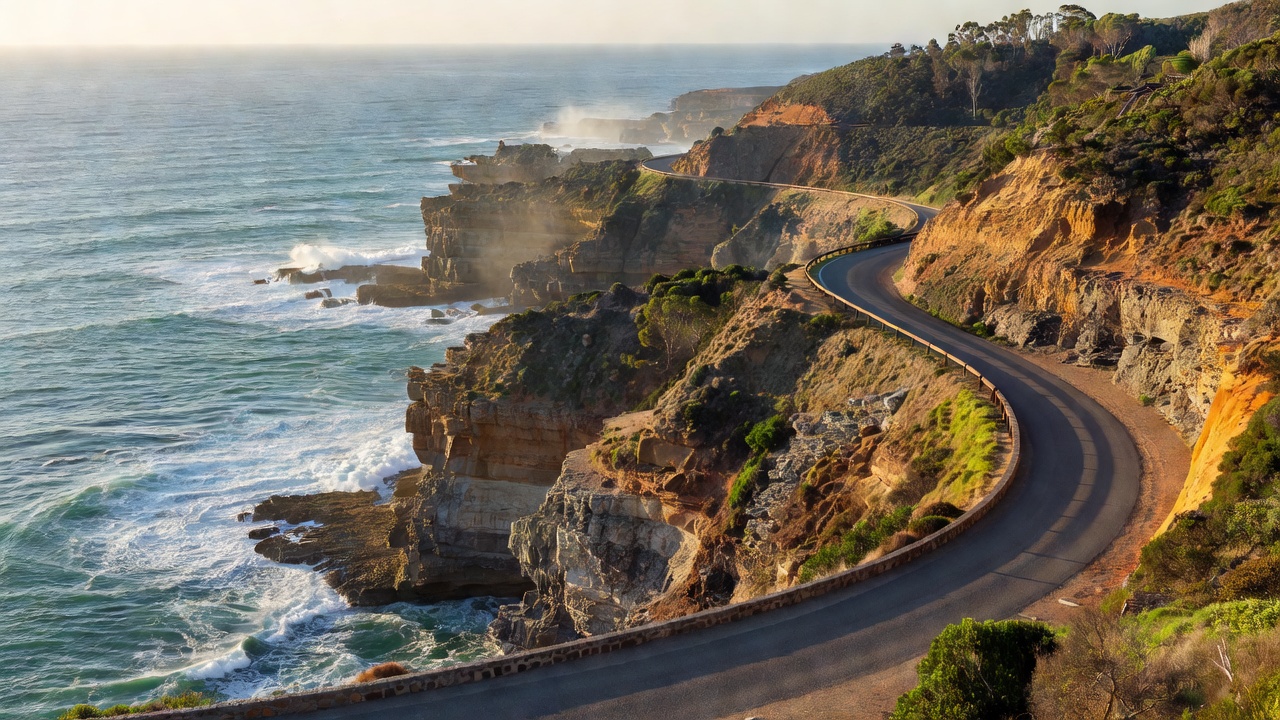
The Great Ocean Road (designated Route B100 in Victoria, Australia) is revered as one of the world's most spectacular coastal highways. Spanning 243 kilometres between the surf town of Torquay and the historic dairy community of Allansford near Warrnambool, it stands as the world's largest war memorial, hand-carved by returned Australian soldiers following World War I between 1919 and 1932.
While mass tourist operators frequently attempt this journey as a grueling 12-hour day trip return from Melbourne, expedition enthusiasts know that experiencing the Great Ocean Road properly requires strategy, pacing, and time to witness sunrise over the limestone stacks when the tour buses have long departed.
- Melbourne to Torquay: 105 km (1h 20m via M1)
- Torquay to Apollo Bay: 90 km (1h 50m via B100)
- Apollo Bay to 12 Apostles: 87 km (1h 35m inland/coast)
- Total Return Loop: 520 km (via inland A1 Princes Hwy return)
Day 1: Melbourne to Lorne — Surf Culture & Ocean Gateways
Depart early from Melbourne CBD at 07:00 AM heading southwest on the West Gate Freeway (M1). Bypass Geelong via the Ring Road and emerge into Torquay, the undisputed capital of Australian wave riding.
08:30 AM — Torquay & Bells Beach Overlook
Your first tactical stop is Bells Beach, situated 6 kilometres southwest of Torquay. The amphitheatre cliffs drop sharply into deep Southern Ocean swells, producing the world-renowned right-hand point breaks contested during the annual Rip Curl Pro every Easter.
10:30 AM — Great Ocean Road Memorial Arch (Eastern View)
Past Anglesea and the cliffs of Aireys Inlet (home to the historic Split Point Lighthouse), you will cross beneath the iconic wooden Memorial Arch at Eastern View. Pull into the dedicated roadside parking bay to pay tribute to the 3,000 returned diggers who carved this highway from raw coastal rock face with picks, shovels, and dynamite.
01:00 PM — Arrival in Lorne & Erskine Falls Excursion
Lorne serves as your base for night one. Before dining on the Lorne foreshore, head 10 kilometres inland into the Otway foothills to witness Erskine Falls plunging 30 metres into a lush fern-lined gulley.
Driver Tactical Advisory
The section of the B100 between Lorne and Apollo Bay is the most dramatic cliff-hugging corridor of the entire route. Exercise extreme caution at high tide during winter storms, and always use designated slow-vehicle turnouts to allow local traffic to pass safely.
Day 2: Lorne to Apollo Bay & The Great Otway Rainforest
Begin Day 2 early with breakfast along Mountjoy Parade before beginning the twisting coastal stretch toward Cape Patton. Keep your eyes tuned for wild dolphins surfacing in Louttit Bay.
09:30 AM — Kennett River Wild Koala Trail
Turn into Grey River Road at Kennett River. This sheltered eucalyptus corridor hosts one of the dense wild koala populations in southern Australia. Walk slowly along the unsealed track scanning the forks of manna gum trees.
12:30 PM — Apollo Bay Seafood Lunch & Ascent into The Otways
Apollo Bay is the final major service town before entering the dense interior of Great Otway National Park. Top up your vehicle's fuel tank here. From Apollo Bay, the highway bids farewell to the shoreline and climbs directly into wet temperate rainforest.
02:30 PM — Maits Rest Rainforest Walk & Cape Otway Lighthouse
Stop at Maits Rest for a 30-minute self-guided boardwalk loop under ancient 300-year-old Myrtle Beech trees and giant tree ferns. Continue southwest down the Cape Otway spur road to reach the Cape Otway Lightstation, constructed in 1848 atop 90-metre ocean bluffs.
Day 3: Apollo Bay to The Twelve Apostles & Port Campbell
The championship sector. As you leave the Otway canopy and rejoin the Southern Ocean near Princetown, the topography transitions into dramatic limestone plateaus perpetually eroded by Antarctic gales.
03:00 PM — Gibson Steps
Located just 1 kilometre east of the Twelve Apostles visitor center, Gibson Steps allow you to descend 86 stone stairs carved into the 70-metre limestone cliff down onto the sand. Stand at sea level beside Gog and Magog, the massive offshore limestone sea stacks.
05:00 PM to Sunset — The Twelve Apostles Viewing Platforms
Arrive at the Twelve Apostles Centre and proceed along the sealed boardwalks. During dusk, the golden light ignites the remaining 7 pillars in brilliant hues of ochre and burnt orange while thousands of short-tailed shearwaters (muttonbirds) return to their cliff-burrow nests.
Beyond the Apostles: Loch Ard Gorge & London Bridge
Do not turn around immediately. 3 minutes west lies Loch Ard Gorge, site of the tragic 1878 shipwreck of the clipper ship Loch Ard where only two teenage passengers survived. Continue another 10 minutes past Port Campbell village to view London Bridge (now an isolated natural arch) and the Arch formation.
The Tactical Return Route to Melbourne
Rather than retracing the winding 243 km coastal turns in darkness, the professional road tripper turns inland at Port Campbell onto the C164, connecting with the dual-carriageway A1 Princes Highway at Colac. This inland inland corridor delivers you back to Melbourne in just 2.5 hours.
Official Destination External References
Cross-check official park advisories and campground permits through government portals: